A colleague once sent me a four-line function for review. I approved it. Then he sent the file it lived in: eight hundred lines, three responsibilities, a class named Manager, and a comment that just said // do not touch. The function was clean. The codebase was not. That gap is where most clean-code advice falls apart.
You have probably read the clean code principles lists already. Meaningful names. Small functions. DRY. Nobody argues with those. The problem is that applying them individually, in isolation, produces the opposite of what you wanted: a codebase that looks tidy line by line and is still miserable to work in. So let me show you what actually holds up.
Key Takeaways
- Clean code is a property of the whole system, not of single functions. A tidy method inside a tangled module is still tangled.
- Naming and function length are the two levers with the fastest visible payoff — you feel the difference in your own diffs within a week.
- Compilation is not a safety net. Strong types, linters and automated tests catch what your eyes cannot.
- You cannot refactor safely without tests. Refactoring without coverage is rewriting with extra confidence.
- Over-applying principles (abstractions for single-use code, pattern-heavy layers) is its own form of debt.
- The real test: can a teammate who did not write this change it next month without asking you anything?
What clean code actually means — and what the definition leaves out
The working definition most people land on is something like: code that another developer can read, understand and modify with minimal friction. That is correct, and it is also incomplete.
Here is the part the definition skips. Readability is not measured at the moment you write the code. It is measured six months later, on a Tuesday, by someone who is debugging a production incident at an inconvenient hour and cannot ask you what you meant. That person is the real audience. Not you, not the compiler, not the reviewer who approves your pull request in ninety seconds.
The compiler does not care about your style
This is why arguments about tabs versus spaces, or whether a function should be twelve lines or twenty, mostly miss the point. The machine will run the same program. The cost is entirely human, and it is paid later, by someone else.
I reviewed a module last year where every variable was named correctly and every function stayed under fifteen lines. It still took me two days to change a single validation rule, because the logic was scattered across nine files connected by a chain of event listeners that nobody could explain. Each piece was clean. The whole was not.
Meaningful names: the cheapest win you will ever get
Renaming costs nothing at runtime and almost nothing in review. It also removes more confusion per keystroke than any other change.

What a name should carry
A name has one job: to make the next line unsurprising. d tells you nothing. currentDate tells you what it is. daysSinceLastInvoice tells you what it means and roughly how it should be used.
- State intent, not type.
userListis worse thanactiveUsers, even though both are arrays. - Match the domain. If the business calls it a "quote", do not call it a
draftOrderin code. - Avoid encodings and noise.
strName,tmpValue2,dataManagerHelperUtil— all of these push the actual meaning out of the frame. - Length should scale with scope. A loop counter can be
i. A class field cannot.
The mistake I made early on was treating naming as a cosmetic pass at the end of a task. It is not. Renaming forces you to decide what the thing is, and half the time that decision exposes a design problem you would otherwise have shipped. If you cannot name a function without using "and", it is doing two things.
Small functions, one responsibility, and the trap of going too far
Short functions are easier to test, easier to name, and easier to delete. All true. The standard advice is "under twenty lines", which is a useful target and a terrible rule.

The real signal is not line count
Line count is a proxy. The thing you are actually measuring is how many reasons a function has to change. A forty-line function that does one coherent thing is fine. A nine-line function that decides formatting, validates input and writes to the database is not, no matter how short it is.
Extract when a block needs a comment to explain itself, when the same logic appears in a second place, or when a piece of the logic deserves its own test. That last one is the strongest signal and the one people skip.
Where over-application bites
I watched a team spend a sprint extracting a payment calculation into an interface with three implementations. Two of them existed only for tests. The third was the real one. Six weeks later the requirements changed and all three had to be rewritten, because the abstraction had frozen a decision that was never stable.
Franchement, that is the failure mode nobody warns you about. Abstraction has a cost, and the cost is paid every time you need to follow the indirection. Extract at the second repetition, not the first. If a helper is used once, inline it back.
Types, tests and tooling: the part your eyes cannot do
Reading code carefully does not scale. You get tired, you skim, you miss the null case. This is why the most reliable clean-code work is the part you hand off to a machine.
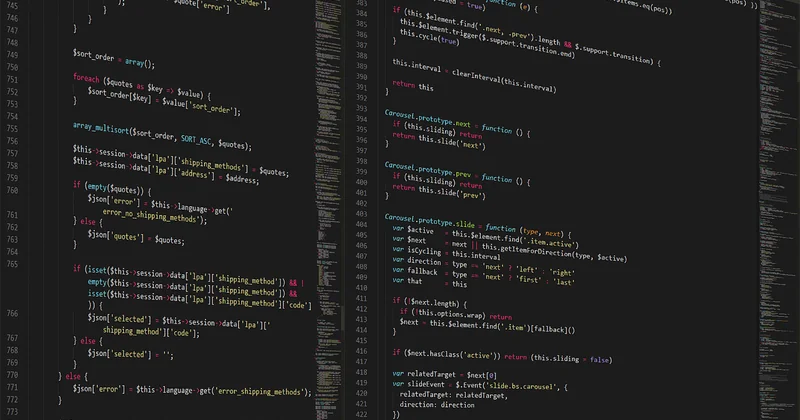
Let the machine enforce it
- A strict type system (TypeScript in strict mode, or a statically typed language with no implicit nulls) removes whole categories of runtime surprise before review.
- Linters and formatters settle every style argument permanently. Pick a config, wire it into the pipeline, stop discussing it in meetings.
- Automated tests are what make refactoring safe. Without them, "cleaning up" is rewriting with extra confidence and no parachute.
The rule that keeps me honest
Never refactor and change behaviour in the same commit. If the reviewer cannot tell whether a line changed for style or for logic, you have made their job harder, not easier. I broke this rule twice last year on a billing module. Both times I spent more time untangling my own diff than I saved by moving faster.
The tooling matters more than most clean-code write-ups admit, because it moves the standard out of an individual's head and into a shared config. A convention that only lives in a document is a convention that dies with the person who wrote it.
Clean code only survives if the team enforces it
You can write impeccable code in a codebase nobody else respects. It will not stay impeccable.
What actually spreads the standard
| Practice | What it fixes | Effort to start |
|---|---|---|
| Small, frequent pull requests | Review fatigue and rubber-stamped diffs | Low |
| Shared linter and formatter config | Endless style debates | Very low |
| Review checklist for naming and responsibility | Consistency across contributors | Medium |
| Test coverage on changed code | Fear of refactoring | High, worth it |
| Boy-scout rule on files you touch | Slow rot in legacy areas | Low per change |
One caveat on the boy-scout rule. "Leave it cleaner than you found it" turns into a sprawl of unrelated changes if you apply it to the whole file. I keep it narrow: clean the function you came to change, and nothing else. That keeps diffs reviewable and keeps the habit sustainable.
When clean code hurts more than it helps
Two situations. First, exploratory work where you do not yet know the shape of the problem, so cleaning aggressively locks in guesswork. Second, genuinely throwaway scripts where the lifespan is measured in days. In both cases, write it messily, ship it, and clean afterward if it survives. The discipline is knowing which mode you are in.
The only benchmark that matters
Here is the question I use now, and it replaced every checklist I used to keep: if a teammate who has never seen this file has to change it next month, and I am on holiday, what happens?
If the answer is "they'll figure it out in an hour", the code is clean. If the answer involves a message to me, a guess, or a prayer, then all the meaningful names and short functions in the world were decoration. Clean code is not a set of rules you satisfy. It is the absence of questions someone else would have to ask you — and the only way to know whether you have achieved that is to imagine them asking.